






Best Waterproofing Solution for Old Roof and New Roof to Prevent Leakage
Contents |
[edit] Introduction
Roof waterproofing helps prevent the ingress of water through the roof structure, reducing the risk of leaks, dampness, deterioration of building fabric and structural damage. The most appropriate waterproofing system depends on factors including the roof construction, whether the roof is new or existing, its condition, the intended service life, and exposure to weather.
Existing roofs with signs of deterioration often require a waterproofing system capable of accommodating movement and bridging small cracks, whereas new roofs can incorporate waterproofing as part of the original construction.
[edit] Waterproofing existing roofs
Older roofs may develop cracks, surface deterioration, failed joints, damaged flashings and other defects as a result of ageing, weathering and movement. Before applying any waterproofing system, the roof should be inspected to identify the source of water ingress, and any significant defects should be repaired.
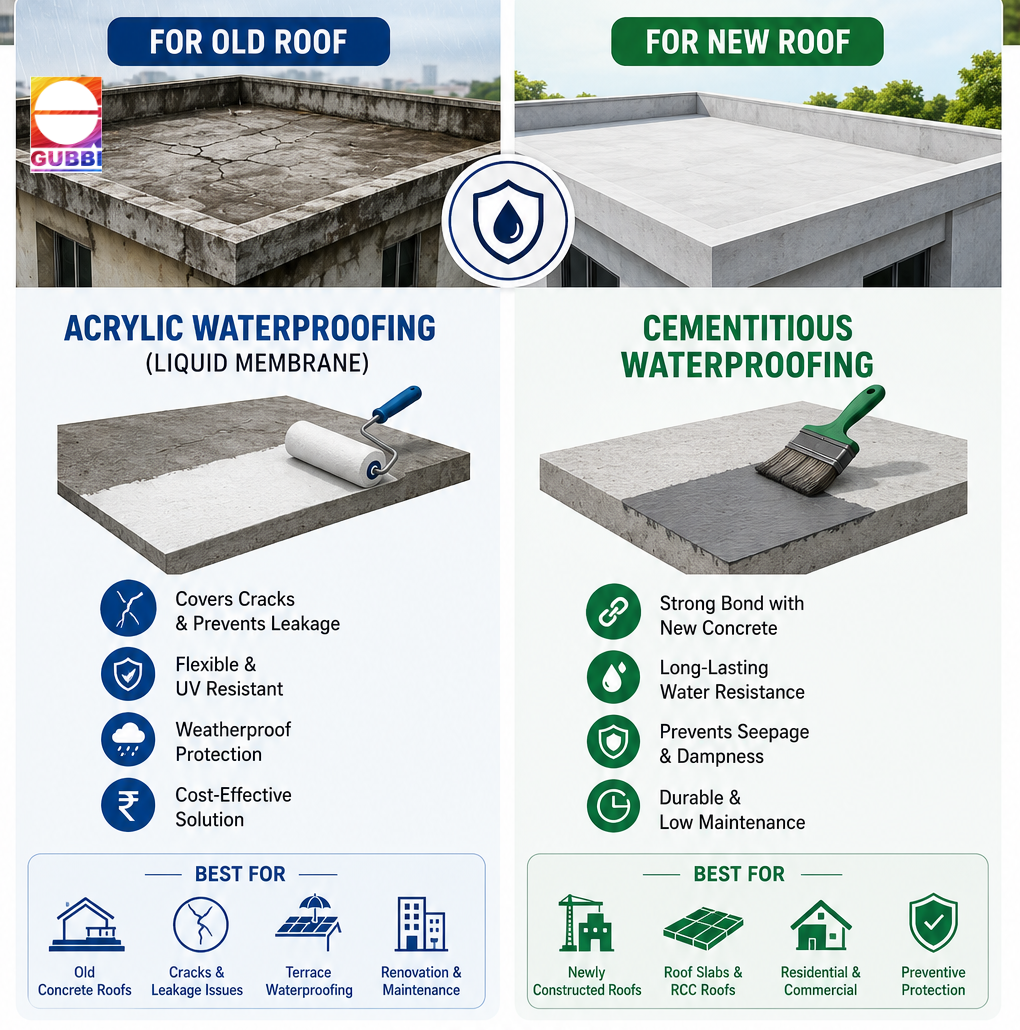
Liquid-applied waterproofing membranes, including acrylic-based coatings, are commonly used as refurbishment systems for existing roofs. These products can provide a continuous waterproof layer over suitably prepared substrates and may accommodate limited thermal movement and minor cracking. Their suitability depends on the roof construction, substrate condition and the manufacturer's specification.
Typical applications include:
- Existing concrete roofs.
- Flat roofs and terraces.
- Roofs with minor cracking or localised water ingress following appropriate repairs.
- Refurbishment projects where complete roof replacement is not required.
[edit] Waterproofing new roofs
New roofs provide an opportunity to incorporate waterproofing during construction before defects develop. The choice of waterproofing system should be compatible with the roof structure, finishes and intended use.
Cementitious waterproofing systems are commonly used on concrete roof slabs and other concrete structures where they form part of the overall waterproofing strategy. They bond well to prepared concrete substrates and can provide durable resistance to water penetration when correctly specified and installed. However, cementitious systems are generally less tolerant of movement than flexible membrane systems and may not be appropriate for all roof types.
Typical applications include:
- New reinforced concrete roof slabs.
- Terraces and podium decks where compatible with the overall waterproofing design.
- Buildings requiring waterproofing before subsequent finishes are applied.
Other waterproofing systems used on new roofs include bituminous membranes, modified bitumen, single-ply membranes, polyurethane liquid membranes, hot-applied systems and mastic asphalt. The most suitable system depends on the roof design, anticipated movement, exposure conditions, maintenance requirements and lifecycle considerations.
[edit] Comparison of waterproofing approaches
| Roof Type | Best Waterproofing Solution | Key Benefit |
| Old Roof | Acrylic Waterproofing | Covers cracks and prevents leakage |
| New Roof | Cementitious Waterproofing | Strong bonding and long-term protection |
[edit] Selecting a waterproofing system
Selection of a roof waterproofing system should take account of:
- The age and condition of the roof.
- The roof construction and substrate.
- The extent and cause of any water ingress.
- Climatic conditions and exposure.
- Expected structural and thermal movement.
- Roof use, including whether it is accessible or forms a terrace.
- Maintenance requirements and expected service life.
- Compatibility with other roofing components and finishes.
The cause of leakage should always be investigated before applying a waterproofing treatment, as surface coatings alone may not resolve defects arising from poor detailing, drainage problems or structural movement.
[edit] Conclusion
There is no single waterproofing system that is suitable for all roofs. Existing roofs often benefit from flexible liquid-applied membrane systems where refurbishment is appropriate, while new concrete roofs may incorporate cementitious waterproofing as part of the original construction. The selection of any waterproofing system should be based on the roof type, substrate, condition, expected movement and the performance requirements of the building.
[edit] Related articles on Designing Buildings
Featured articles
Check out some of the best features and news from Designing Buildings as well as key stories from around the web.

CIOB publishes free template to help assess and manage risks.
ECA's reflections on Party Conference season

Burnham wants to be confident of winning before asking for a fresh mandate.
New Chief Construction and Scientific Adviser

Sergio Cavalaro, Professor of Infrastructure Systems at Loughborough University.
Building safety levy for England

CIAT publish estimator tool for members.

Water sector faces a growing crisis that could slow the delivery of vital infrastructure.
Undervaluing our industrial past

Heritage value changes as taste for building styles changes.
Changing expectations around competence and compliance

New information sheet from CIAT.
Grenfell investigation files passed to CPS

Angela Rayner apologises on behalf of the British state.

Electrical contractors need to understand the practical implications.

The real barrier to getting more value from digital technology.

Your guide to The Construction Reset at UKCW Birmingham.

Accommodating the Victorian and Edwardian working woman. Book review.